Blog Posts
Blog Post – 03.11.2026
Years 1500-1890 – Cats in Early American Society
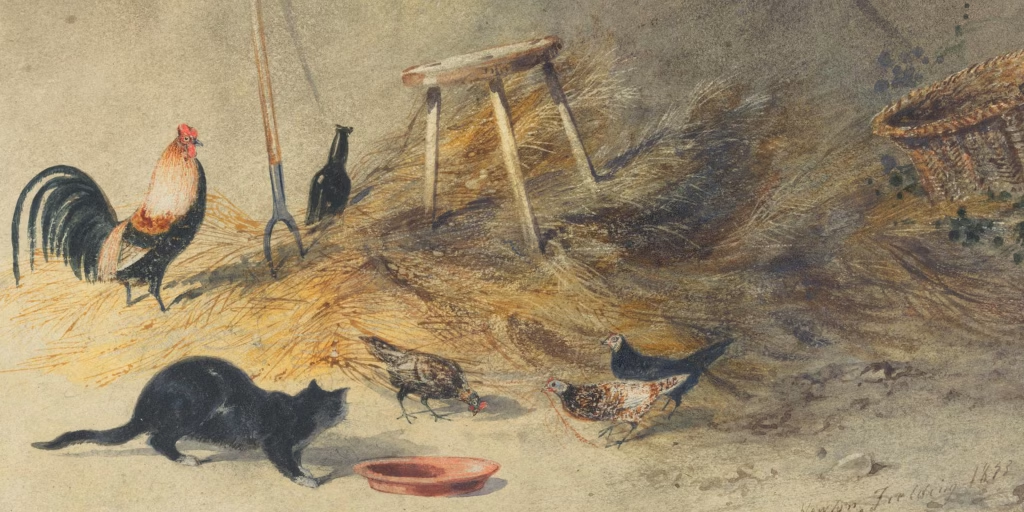
Cats first arrived in what is now the United States during the Age of Exploration. Most European ships traveling to America in the 16th and 17th century always carried cats onboard. Their main job was practical: controlling rats and mice and other rodents that could destroy food supplies and nautical equipment.
When the settlers disembarked from their journey, cats continued their role as “rodent exterminators.” During this time, what we know as our typical house cat, settlers considered them as working animals, not pets.
As settlements, population and food supply grew, cats continued to protect grain, smaller vegetables and even homes from rodents. early every farm, barn, and port town had cats for pest control. Because of this, the domestic cat spread quickly throughout colonial America.
By the 18th and 19th centuries the public’s love for cats grew. Although they were still considered working animals, many “progressive” families, mostly lead by the compassion of women and children, often adopted their favorite barn cat, slowly integrating them into family life.
1890 – 1945 – The Rise of Cats as Pets
By the late 19th century, more cats in the United States began to move from barns into living rooms and parlors. This shift happened during a time when American cities were growing rapidly, and people were starting to think differently about these special creatures. Instead of viewing cats only as rodent hunters, many Americans began to see them as companions and members of the household.
The popularity of these semi domesticated cats was catalyzed (no pun intended) by urbanization in the late 1800’s. As people began to move from farms to cities like New York City, Boston, and Philadelphia Trading farmhouses, barns and acres of land for apartments and smaller homes created ideal conditions for cats to evolve into household pets.
In 1895 the first cat show took place in New York City. This event was one of the first large-scale cat exhibitions in the United States. 176 cats were entered into the competition. A Brown tabby Maine Coon name Cosey won best in show elevating her to be Americas first “celebrity” cat.
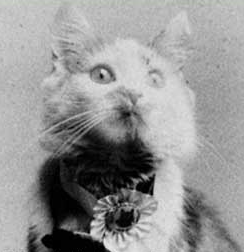
Thousands of visitors attended, and newspapers reported on the show with great enthusiasm. The event transformed cats from working animals into fashionable and admired pets.
Cat shows continued to grow in popularity. In 1906 the Cats Fanciers’ Association was founded, helping to establish official breed standards; organizing many cat shows across the country, fully embedding cats into American culture.
During the early 20th century, cats became more visible in American entertainment and media. One of the most famous cartoon cats of the era was Felix the Cat, created during the silent film era. Felix became one of the first animated characters to achieve worldwide popularity and helped cement the cat’s image as a clever and mischievous animal.
Cats also appeared in: Comic strips, Children’s books, Advertising illustrations, and Early animated films. These portrayals helped make cats more familiar and beloved to the American public.
During World War II (1939–1945), some cats returned to their old habits of rodent annihilation. Often kept on Navy ships to control rats, in Military warehouses storing food and supplies and factoriesthat were producing wartime equipment. But it wasn’t just the working cats that had an impact during WWII. At home, cats also provided emotional comfort to families coping with wartime stress and separation.
By the end of the war, the role of cats in American life had expanded greatly. They were still useful hunters and pest controllers, but they had also become beloved companions in millions of households. This period helped set the stage for the post-war boom in pet ownership, when cats would become one of the most popular pets in the United States.
Cats are one of the most beloved pets in the world today, but their story began thousands of years ago. The modern house cat has a fascinating history that connects ancient civilizations, farming communities, and the wild ancestors that still exist today.
Blog Post – 03.10.2026
Brief Overview
Cats are one of the most beloved pets in the world today, but their story began thousands of years ago. The modern house cat has a fascinating history that connects ancient civilizations, farming communities, and the wild ancestors that still exist today.
Early Origins
The domestic cat originally descended from a wild species known as the African wildcat. Scientists believe that cats began living alongside humans around 9,000 years ago in the Near East. As early farmers stored grain, rodents were attracted to the food supply. Wildcats followed the rodents, and humans soon realized these animals were useful for controlling pests.
Unlike many other animals, cats were not fully domesticated by humans in the traditional sense. Instead, they formed a mutually beneficial relationship with people. Humans tolerated the cats because they hunted mice, and cats stayed because there was a reliable food source.
Cats in Ancient Egypt
Cats became especially important in ancient Egypt, where they were admired and even worshipped. Egyptians believed cats had protective qualities and associated them with the goddess Bastet, who represented home, fertility, and protection.
Killing a cat in ancient Egypt was considered a serious crime. Many cats were even mummified and buried with their owners to accompany them into the afterlife.
Cats Spread Around the World
As trade routes expanded, cats began traveling with sailors on ships. Their ability to control rats made them valuable companions on long sea voyages. Because of this, cats spread from the Middle East and Egypt to Europe, Asia, and eventually the rest of the world.
During the Middle Ages in Europe, cats sometimes had a negative reputation and were associated with superstition. However, their usefulness as hunters ensured they remained part of many homes and farms.
The Modern House Cat
Today, the house cat is one of the most popular pets on Earth. There are dozens of recognized cat breeds, each with unique characteristics and personalities. Despite thousands of years of living with humans, many house cats still retain their natural hunting instincts.
Whether they are chasing toys, napping in sunny windows, or curling up beside their owners, modern cats continue the long tradition of companionship that began thousands of years ago.
Final Thoughts
From wild hunters to beloved companions, the journey of the house cat is a remarkable story. Cats have adapted to life with humans while still maintaining the independence and mystery that make them so special.